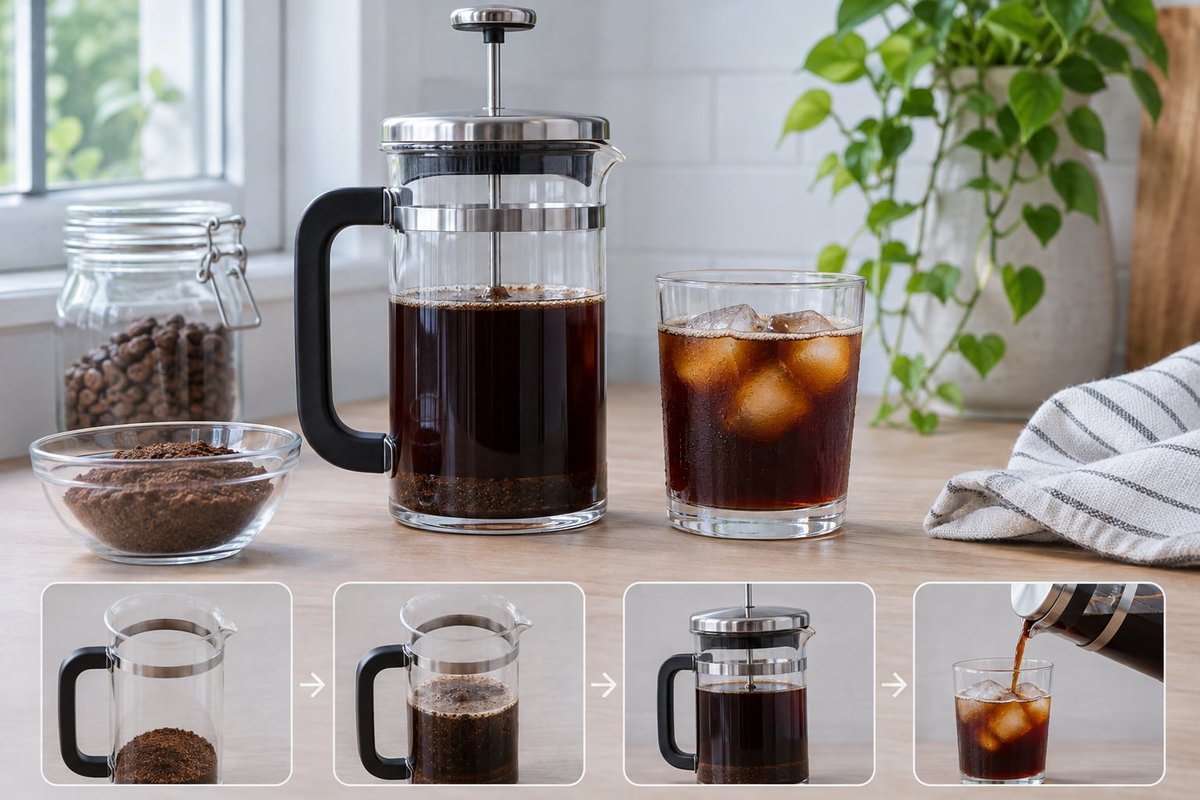
For ready-to-drink French press cold brew, start with 60g of coarse coffee and 600g of cold water. Steep in the fridge for 16 hours, press gently, and pour the entire batch into a clean container. Use a press with enough room for water, grounds, and the lid; a nominal 1-liter model is a comfortable starting size for this batch.
You do not need a separate cold-brew maker. The press is the steeping vessel and first strainer. Its mesh leaves some fine sediment, so an optional paper-filter pass makes a cleaner drink. This is overnight cold brewing, not hot French press coffee poured onto ice.
Start with this recipe
| Setting | Starting point |
|---|---|
| Coffee | 60g, coarsely ground |
| Cold water | 600g |
| Ratio | 1:10, ready to drink |
| Steep | 16 hours in the fridge; adjust within 12–24 hours |
| Container | Clean French press with headroom |
| Finished amount | Less than 600ml because grounds retain liquid |
- Clean the press. Wash the vessel and filter assembly, rinse thoroughly, and check the glass for damage. Old coffee oils can make a fresh batch taste stale.
- Add coffee and water. Put 60g of coarse grounds in the press and add 600g of cold drinking water. Stir gently until every patch is wet.
- Cover without pressing. Fit the lid with the plunger raised. If that will not fit your fridge, use a clean food-safe cover and keep the filter assembly clean until straining.
- Refrigerate for 16 hours. Keep the batch cold throughout the steep. Note the start time so the next batch is comparable.
- Press gently. Lower the plunger slowly until it meets resistance. Do not force a stuck plunger or compress the grounds to extract the last liquid.
- Decant everything. Pour into a clean, covered bottle or jug. Leave the last silty mouthful in the press rather than tipping it into the drink.
- Taste before adding ice. Drink as it is, or add a small amount of water or milk if it is too intense.
Match the batch to your actual press
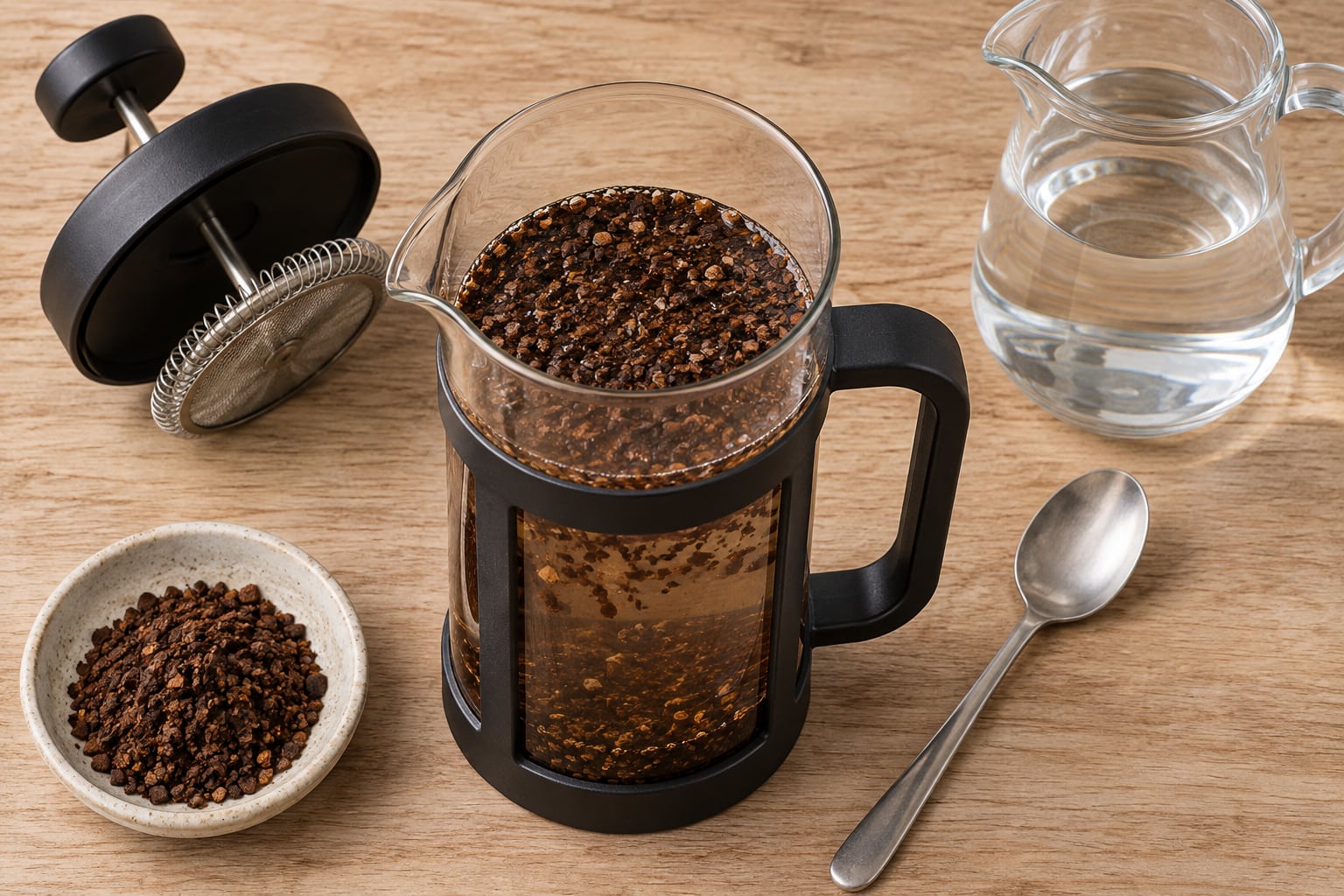
The water weight is not the space the whole mixture occupies. Grounds take room too. Never fill to the rim or force the lid onto a full vessel. Use the manufacturer’s maximum fill level as the limit, and reduce the batch if necessary.
| Nominal press capacity | Coffee | Water | Ratio |
|---|---|---|---|
| About 350ml | 20g | 200g | 1:10 |
| About 500ml | 30g | 300g | 1:10 |
| About 1 liter | 60g | 600g | 1:10 |
| About 1.5 liters | 90g | 900g | 1:10 |
These deliberately modest starting batches leave room for the grounds and lid; they are not promises that every press labeled with that capacity has the same usable volume. Check your vessel. French press “cups” are small servings, so a “3-cup” model does not mean three large mugs.
For other quantities, use the cold-brew ratio guide. Expect some water to remain in the grounds: 600g added does not produce 600g in your bottle. Measure the finished yield once if you want to plan exact servings.
Want concentrate instead?
Start with a 1:6 ratio: 60g of coffee to 360g of water. Use the same fridge-first workflow and begin with a 16-hour steep. After straining, mix equal measured amounts of concentrate and water as your first serving, then adjust to taste.
For example, 100g of finished concentrate plus 100g of water makes 200g before ice. Milk can replace the added water. Dilute what you pour, not the original brewing-water quantity: the grounds have already retained some liquid.
A 1:6 concentrate diluted 1:1 is a different recipe from a 1:10 ready-to-drink batch. Do not expect identical strength or flavor, and do not describe either one as an exact caffeine dose. Extraction and the beans themselves affect the result.
Grind coarse and adjust one variable
Aim for coarse, clearly visible particles rather than a powdery drip grind. The grind-size guide provides a starting texture. Very fine grounds make pressing and paper filtering slower, and more sediment passes into the cup.
Start at 16 hours in the fridge. If the drink is thin and sharp, try a longer steep on the next batch while keeping the grind and ratio the same. If it becomes woody or drying, shorten the steep. Only move the grind after you have compared batches at a consistent steep time.
Weak and sour are different. If it tastes balanced but watery, a little more coffee may help more than several extra hours. Strong coffee without unnecessary bitterness explains that distinction.
Remove grit without squeezing the grounds
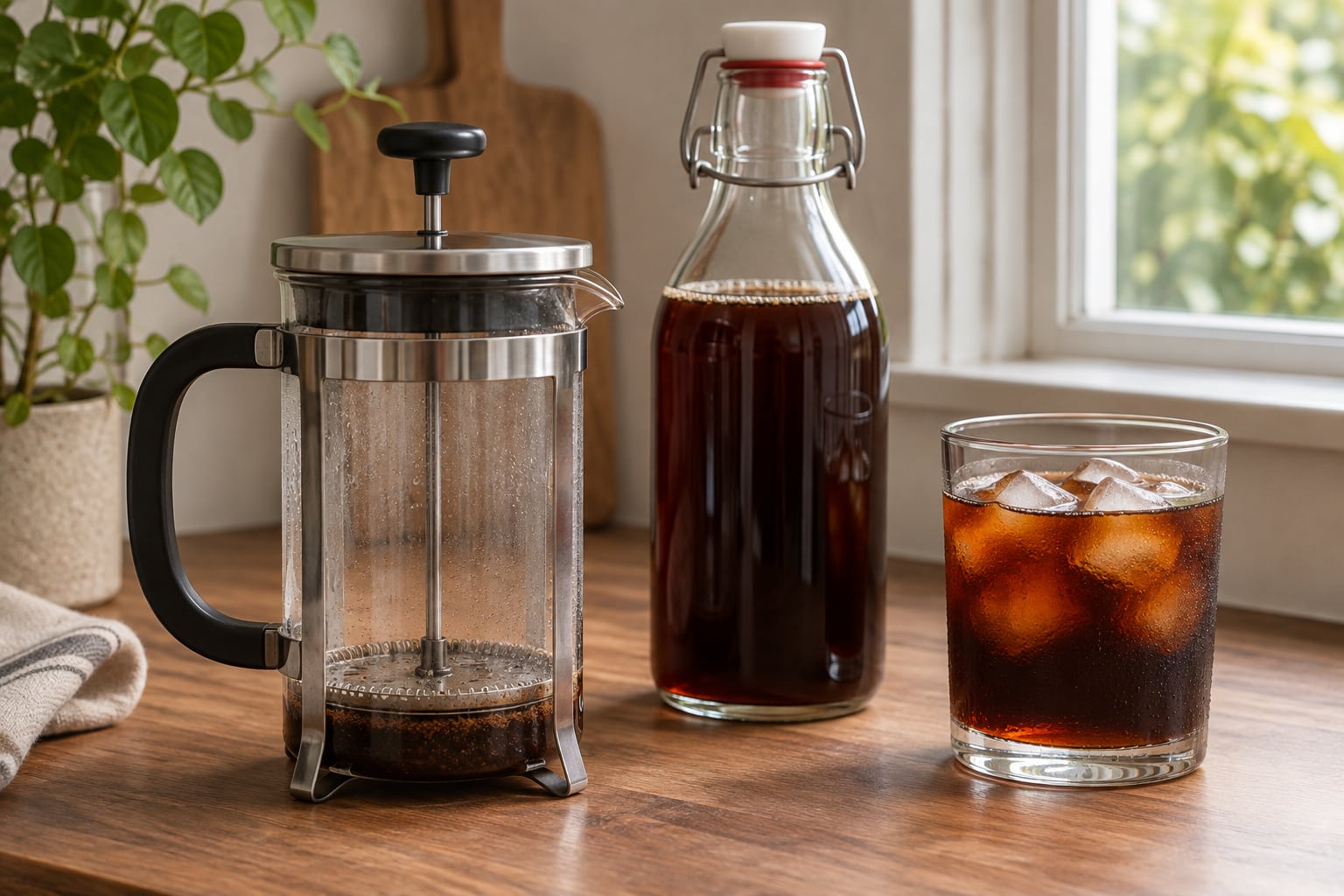
The mesh catches larger grounds; it is not a paper filter. Press slowly, avoid shaking the vessel, and decant without pouring the last sludge. If you want a cleaner cup, pass the strained coffee through a rinsed paper filter in a suitable dripper over a clean jug. Let it drain without squeezing.
That second pass may take time. It removes suspended particles and some oils; it does not turn cold brew into hot pourover coffee, because the extraction has already happened cold.
Store the drink separately and keep it cold
Keep the finished coffee covered in the fridge at 4°C / 40°F or below. Label it with the brew date. Make a batch you can drink within about three days for a simple freshness target; that is not a tested shelf-life guarantee.
Add milk to individual servings rather than the storage bottle. Discard coffee with mold, an unusual smell, or uncertain storage history. A normal smell cannot prove a batch is safe, so do not taste-test a suspect one.
If you want a cold drink now, use iced coffee brewed hot onto ice. The cold brew vs iced coffee comparison explains the difference in taste and preparation time. For overnight batches, the most useful upgrade is simply recording your ratio and steep time so the next one is predictable.