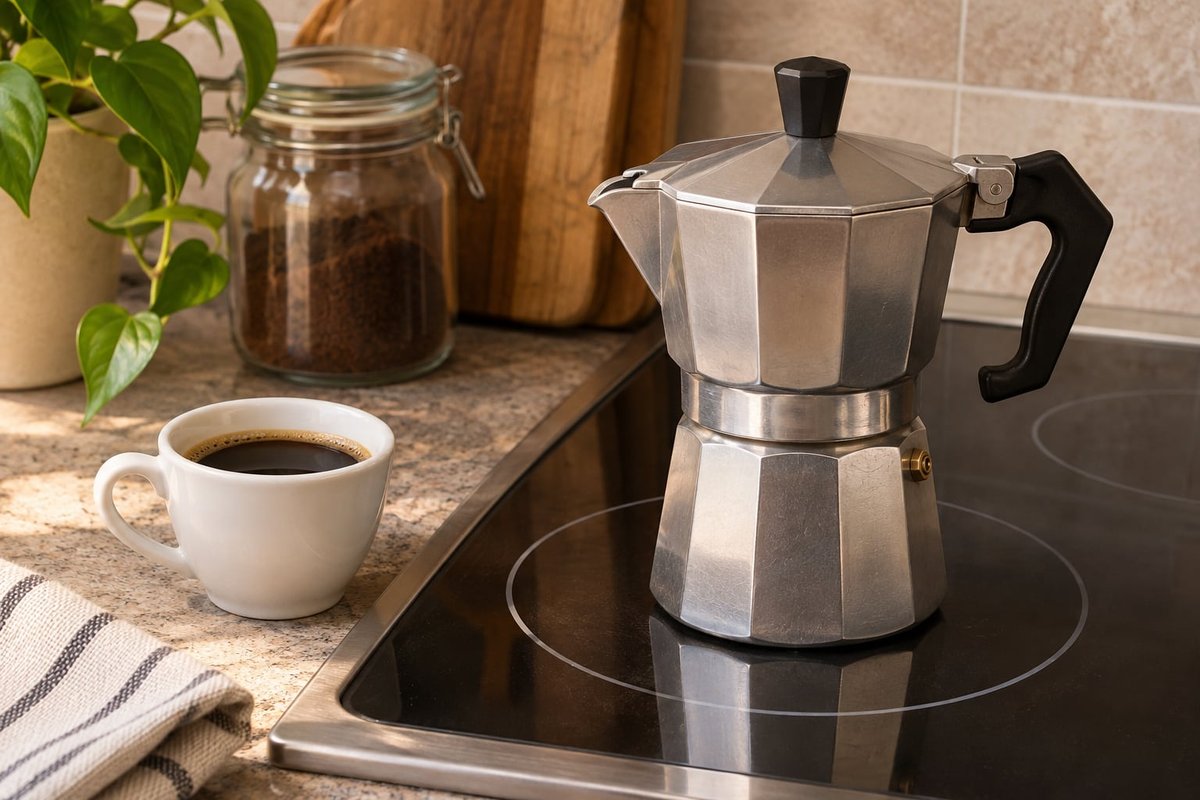
If your Moka Pot sputters only as the coffee finishes, remove it from the heat. If it sputters before a steady flow, leaks at the middle, or produces no coffee, stop and check the cooled pot before trying again. More heat can make an obstructed or leaking pot worse.
Steam escaping from the safety valve is a reason to stop, not a normal brewing target. Turn off the heat, keep clear of the vent, and let the pot cool completely. Do not unscrew it, tighten the chambers, remove parts, or try to unblock it while hot or pressurized. Bialetti’s troubleshooting guidance warns that repeated valve venting can indicate a blockage or a faulty valve.
Match the symptom before changing anything
| What you notice | Likely place to look | Next action |
|---|---|---|
| Smooth flow, then gurgling near the end | End of the brew | Remove from the heat |
| Sputtering from the first drops | Heat, grind, or an imperfect seal | Cool fully; inspect before the next attempt |
| Steam or water at the threaded middle | Dirty rim, misplaced or worn gasket | Clean and inspect the cold seal |
| No coffee and no unusual steam | Heat-source compatibility, assembly, grind | Stop heating; check the cooled pot |
| Steam from the safety valve | Possible obstruction or valve fault | Stop use until checked according to the manufacturer |
| Coffee tastes burnt despite normal flow | Heat or brewing continued too long | Lower the heat and stop sooner next time |
A symptom narrows the checks; it does not identify a fault with certainty. If the pot is damaged or a valve problem persists, contact its maker rather than modifying the valve.
Why does it sputter at the end?
A Moka Pot uses pressure in the lower chamber to move water through the coffee and into the top. As the water level falls, the flow can become a mixture of liquid and steam. The resulting gurgle is your cue to finish, rather than a sign to squeeze out the last possible spoonful.
Use a low-to-medium setting suited to your stove and pot. Watch for a controlled flow rather than a forceful jet. Remove the pot by its handle when gurgling begins and set it on a heatproof surface. Keep the handle out of any flame and never leave the brew unattended.
The main Moka Pot recipe explains filling and heat from the beginning. If the pot flows normally but the cup tastes harsh, start there rather than taking the brewer apart to find a fault that may not exist.
Check the coffee basket without packing it
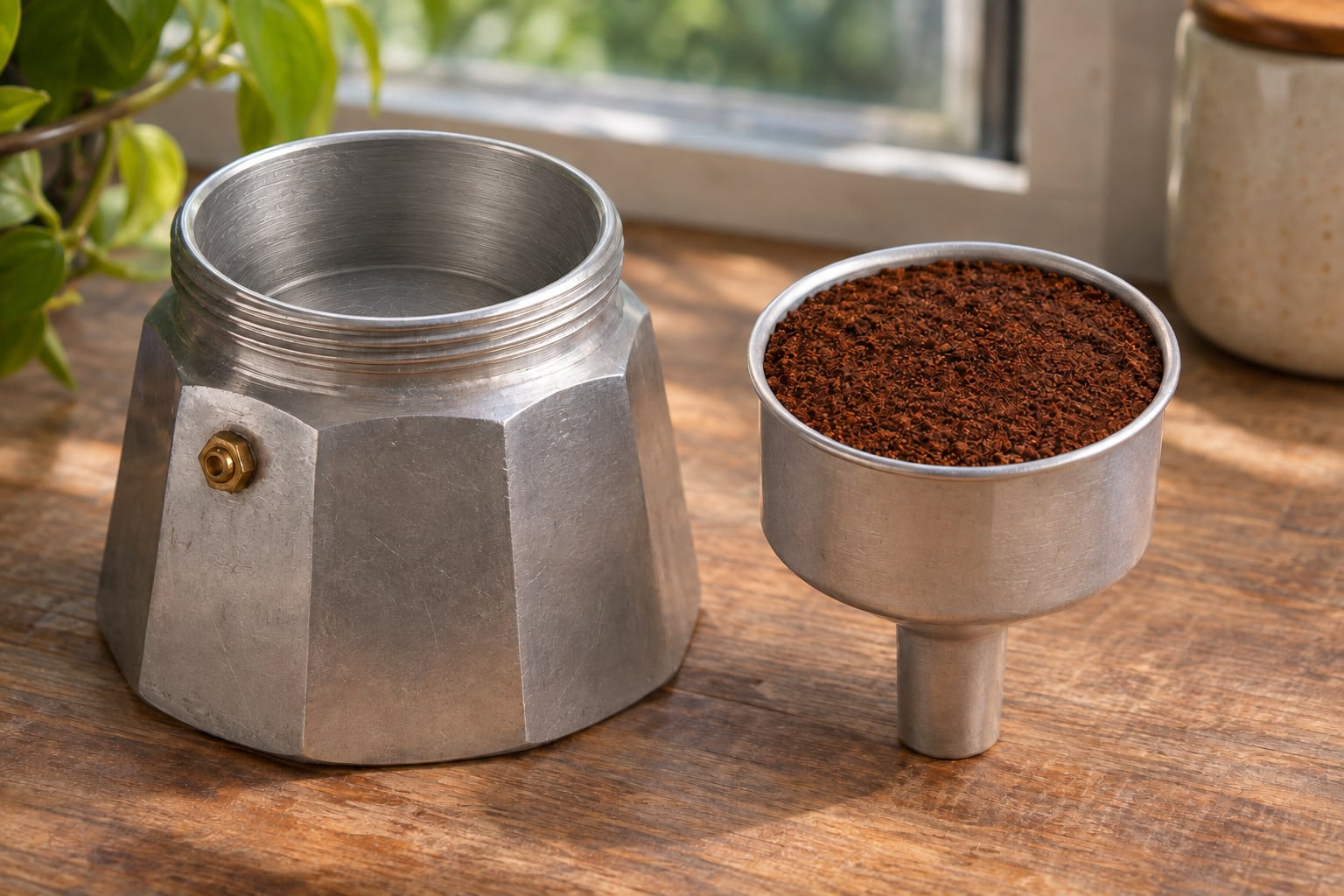
Fine espresso powder or compressed grounds can resist the flow too much. Use coffee intended for a Moka Pot: finer than typical drip coffee, but not the very fine setting used for a standard espresso basket.
Fill the basket level without tamping, pressing with a spoon, or making a mound. Clear loose grounds from the rim. Do not try to compensate for a blocked brew by leaving the basket half full; use a pot sized for the amount you want.
For your next attempt, change one thing. If the basket was packed, correct that before changing the grinder. If the grounds were loose but powdery, move a little coarser. The grind-size guide helps separate those two starting points.
Why does it leak around the middle?
The gasket needs a clean, even surface to seal against. A few grounds on the rim, a filter plate seated incorrectly, or a hardened gasket can let steam escape before the brewer works properly.
Once everything is completely cool:
- Separate the upper and lower chambers.
- Clear grounds from the rim and threads.
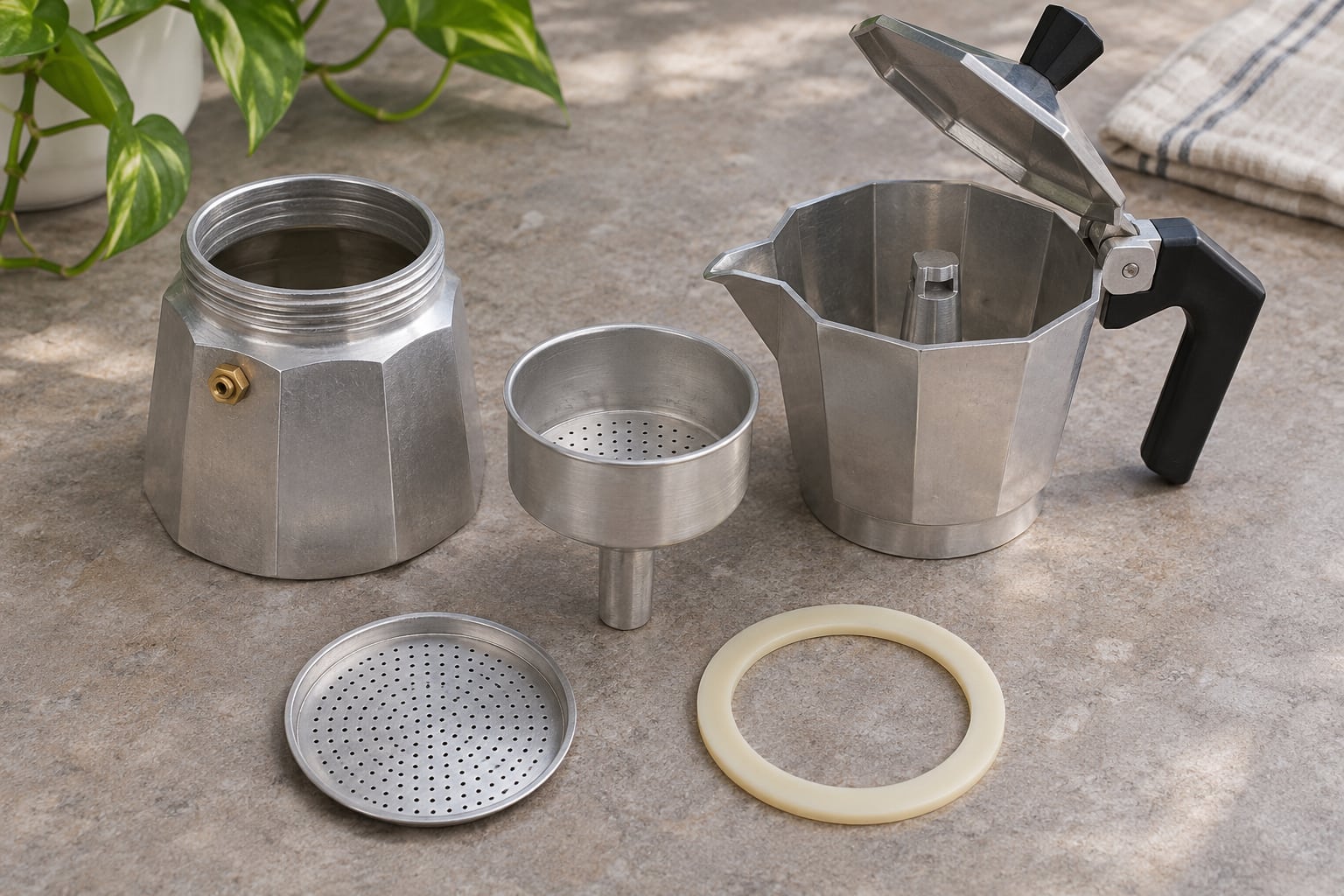
- Check that the filter plate and gasket are present, fitted correctly, and undamaged.
- Look for a gasket that is cracked, stiff, flattened, or no longer fits securely.
- Reassemble as the manufacturer directs, using correctly sized replacement parts if needed.
Do not use extra force as a substitute for replacing a worn seal. Never try to tighten a leaking pot while it is brewing.
What if no coffee comes out?
First stop heating and allow the pot to cool. Then check the ordinary causes in a sensible order.
Check the stove. An aluminum Moka Pot may not work directly on induction. The pot and hob must be compatible; follow their instructions rather than turning the hob higher indefinitely.
Check the water level. Use the level specified for the model. For the common Bialetti Moka Express, fill to the lower edge of the safety valve and keep the valve uncovered. Do not overfill the chamber to increase the serving size.
Check the flow path. Look for grounds or deposits in the funnel and filter plate, following the manufacturer’s cleaning procedure. Do not drill holes, add paper filters unless approved for the model, or alter the safety valve. If the valve needs service, use the manufacturer’s support process.
Check the assembly. Missing or mismatched parts can prevent a seal even when the outside looks normal. Replacement gaskets and plates must match the pot’s exact model and size.
Fix the taste after the pot flows normally
| Taste | First adjustment |
|---|---|
| Burnt or harsh | Lower the heat and finish at the first end-stage gurgle |
| Weak, with an underfilled basket | Fill the basket level on the next brew |
| Too intense but otherwise pleasant | Dilute the finished coffee with hot water or milk |
| Stale or metallic | Clean, dry, and inspect the pot; check bean freshness |
For taste problems across brewers, use fix sour, bitter, or weak coffee. If you are expecting the body or crema of a pressure-machine shot, read Moka Pot vs espresso: a working Moka Pot still makes a different drink.
Return to a normal recipe only after the mechanical problem is resolved. The useful goal is a repeatable, controlled brew, not the loudest or fastest one.