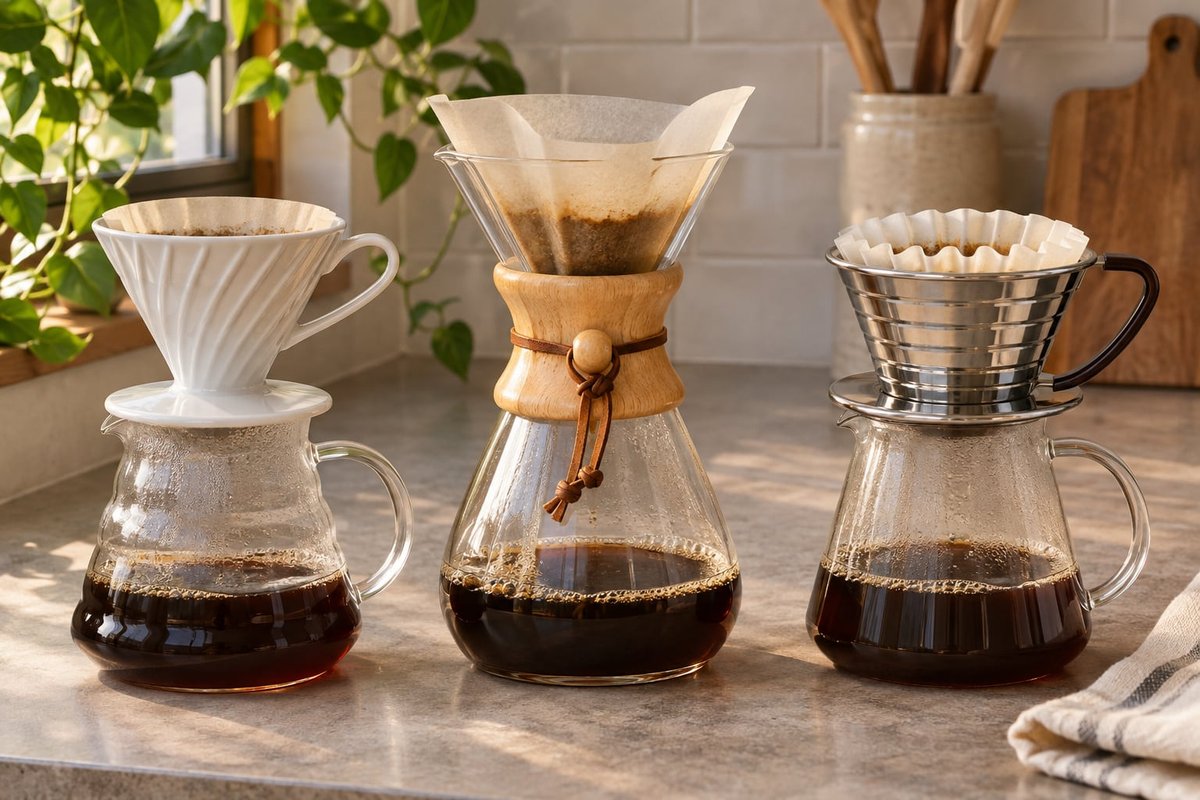
Choose a V60 for a compact, flexible single-cup setup, a Chemex if you usually serve a shared carafe, or a Kalita Wave if you prefer a flat-bed brewer and gentle pulse pours. All three can make clean, flavorful coffee. Your serving size, available filters, and willingness to pour carefully are more useful buying criteria than promises that one shape always tastes sweeter.
You do not need all three. A grinder, a scale, fresh beans, and a recipe you repeat will usually teach you more than switching brewers every morning. Start with the one that suits your normal batch and keep it long enough to learn what an adjustment does.
Compare the practical differences
| Question | V60 | Chemex | Kalita Wave |
|---|---|---|---|
| Coffee-bed shape | Cone | Cone integrated with carafe | Flat bottom |
| Paper | Matching V60 cone paper | Matching Chemex bonded paper | Matching Wave pleated paper |
| Serving setup | Dripper over mug or server | Brewer and server in one | Dripper over mug or server |
| Useful starting batch here | 20g coffee, 320g water | 40g coffee, 640g water | 20g coffee, 320g water |
| Usual hands-on task | Control a flowing pour | Manage pours and a larger carafe | Keep gentle pulses over a flat bed |
| Main buying check | Size and material | Carafe capacity and filter supply | 155 or 185, material, and matching papers |
Those recipes all use 1:16, but they are not instructions to use the same grind or pouring schedule. Follow the individual V60, Chemex, and Kalita Wave guides for the actual steps.
Which is easiest to learn?
For someone starting with one mug, a V60 is a sensible default if compatible filters are easy to find. It is light in plastic versions, sits on many suitable mugs and servers, and works with a simple recipe. Its open outlet makes grind and pouring changes noticeable, so repeatability matters.
A Kalita Wave offers a different routine: the flat coffee bed and small outlets encourage controlled pulse pours. That may feel easier to repeat, but it is not immune to poor filter fit, very fine grounds, or aggressive stirring. Different Wave materials and versions do not necessarily drain identically.
A Chemex is straightforward to serve from once the brew is done, but its paper setup and larger typical batch deserve attention. Position the filter correctly and keep the spout’s air path open as the recipe describes. Do not buy a large Chemex solely because you might occasionally have guests if almost every brew is one small cup.
Will the coffee taste different?
Yes, it can, but the brewer name is not a flavor guarantee. Paper thickness, how the bed is wetted, grind distribution, water temperature, and the amount you brew all affect the cup. The beans and roast remain major influences.
Chemex paper is relatively thick and commonly produces a very clean cup with little suspended sediment. V60 and Wave brews are also paper-filtered and can be clear and delicate. You can make a bitter V60 or an under-extracted Chemex just as easily as a balanced one if the recipe does not suit the coffee.
Compare by brewing each well, rather than forcing identical grind settings on different systems. If you want to understand what the paper changes, read flat-bottom vs cone filters. The flavor-profile guide helps with choosing beans before you blame the brewer.
Check filter availability before buying
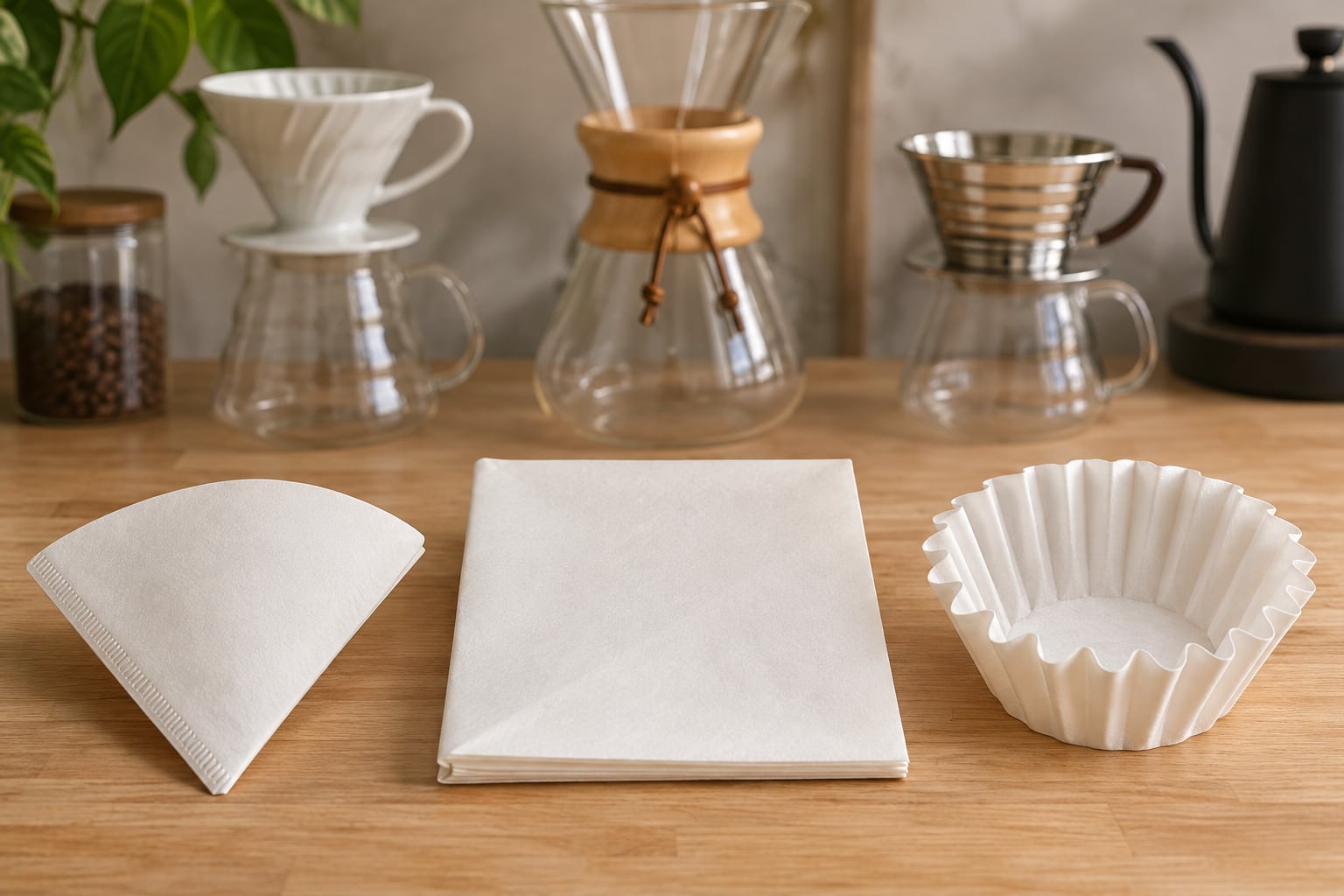
The recurring purchase is the filter. Check whether your local shop or usual supplier carries the exact paper, not simply something described as a cone filter. A paper that fits badly can change the bed, collapse, obstruct an outlet, or spill grounds.
V60 papers come in sizes, and Wave papers must match the intended 155 or 185 brewer. Chemex has different filter formats for different models. Follow the product’s compatibility information rather than assuming every paper carrying the brand name fits every brewer.
Rinse and seat the paper as that recipe directs. On the Wave, keep the pleats open instead of crushing them flat. On the Chemex, pay attention to the layered side and spout. Small setup details can matter more than changing the brewer.
Match the brewer to the amount you drink
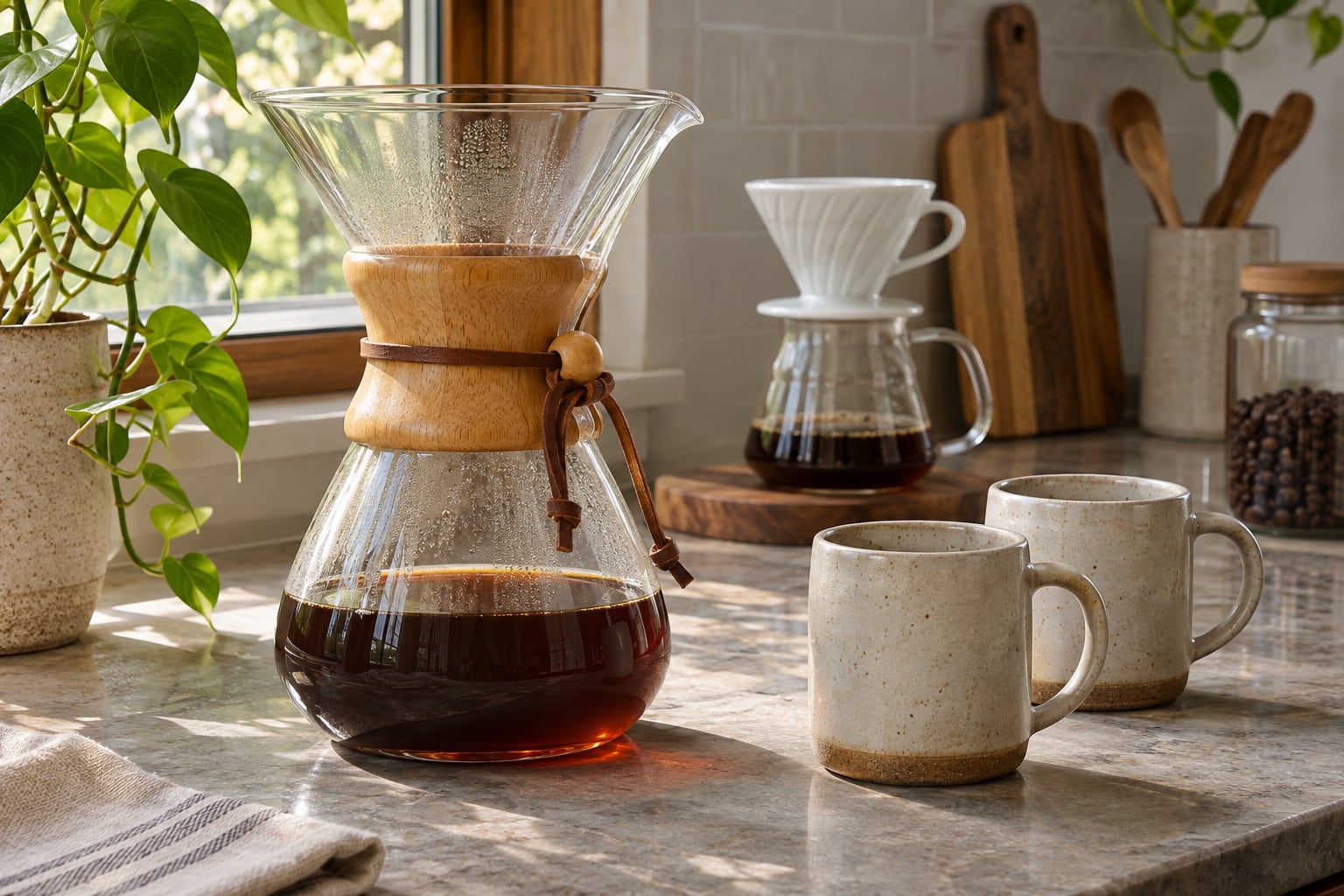
The site’s 20g-to-320g V60 and Wave recipes suit a generous serving, with less than 320g reaching the cup because the grounds retain water. The Chemex’s 40g-to-640g recipe is intended for two mugs from a suitably sized model. Manufacturer “cups” are not necessarily 8-ounce mugs.
Use actual water weight when comparing capacity. The coffee-per-cup guide explains serving labels, and the ratio calculator handles the arithmetic. Keep within the model’s capacity and leave headroom for the bloom and pouring.
Scaling a ratio does not preserve the drain time. More coffee makes a deeper bed in the same brewer, so a larger batch may need a slightly coarser grind or a different pouring pattern. Establish a separate baseline rather than insisting that every batch finish in three minutes.
What about cleanup and breakage?
All three let you lift out a paper filter with the grounds. Dispose of those appropriately, then clean the brewer as its maker directs. Glass servers and hourglass brewers need a brush that reaches inside; do not force your hand into a narrow neck.
A plastic V60 is a practical choice when low weight and resistance to accidental knocks matter. Glass and ceramic can break. A metal Wave may suit someone who wants a separate dripper without a glass cone, but a metal dripper does not make a glass server unbreakable.
If cleanup matters more than pouring, a Clever Dripper or Hario Switch gives you a timed steep and paper-filter separation. They still need fitting filters and a stable receiving vessel.
Buy one, then learn its baseline
Choose the V60 for an adaptable everyday single-cup setup, the Chemex for the carafe you regularly share, or the Wave because its size, paper supply, and pulse-pour workflow fit you. Keep the first few brews consistent before adding techniques.
If the drain suddenly slows, use the stalled pour-over checklist for the general sequence of grind, agitation, and paper checks, while following your brewer’s own recipe. If the coffee tastes wrong despite normal flow, coffee troubleshooting is the better next stop. A different brewer is rarely the first adjustment a bad cup needs.