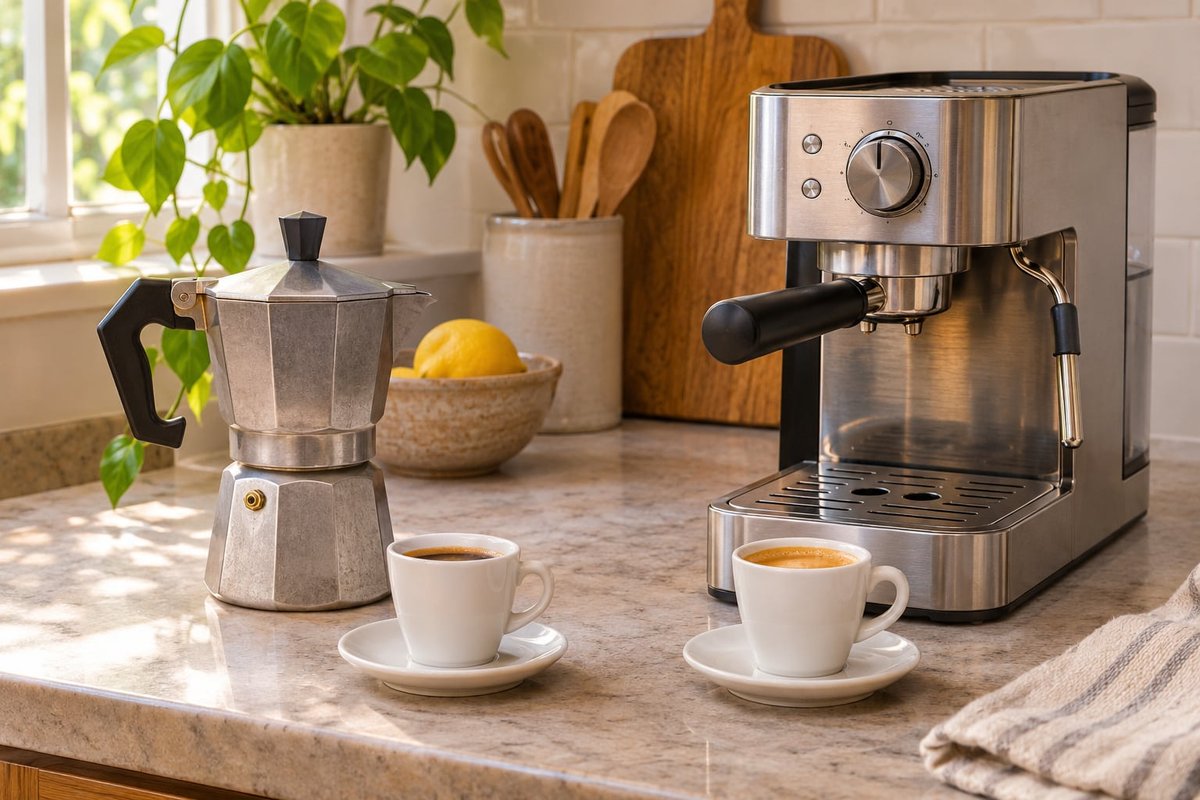
Choose a Moka Pot if you want concentrated coffee for small cups or milk drinks with a simple stovetop routine. Choose an espresso machine if you specifically want espresso: a short, pressure-brewed shot with adjustable dose, yield, and shot time. A Moka Pot is useful on its own terms; it does not need to imitate every feature of espresso.
“Stovetop espresso maker” is a common name for a Moka Pot, but the drinks are different. Both pass water through grounds under pressure. The pressure, grind, basket, flow, and resulting concentration differ, which is why substituting one recipe directly for the other does not work.
Compare the drinks and the routine
| Question | Moka Pot | Espresso machine |
|---|---|---|
| What does it make? | Concentrated stovetop coffee | A short espresso shot |
| How is the dose set? | Fill the model’s basket level, without tamping | Weigh a dose suited to the basket |
| Typical grind | Fine, but coarser than standard espresso | Very fine for a non-pressurized basket |
| Main controls | Heat, grind, and when you stop | Dose, grind, beverage yield, and time |
| Crema | Usually little or none | Often present, depending on beans and equipment |
| Milk | Heat and froth separately | A steam wand may be built in |
| Practical commitment | Suitable stove and a correctly sized pot | Machine, suitable grinder, and more maintenance |
For the actual recipes, use how to brew a Moka Pot and how to brew espresso. The table describes the usual home setups; pressurized espresso baskets and specialty Moka designs can behave differently.
Is Moka Pot coffee as strong as espresso?
It is usually less concentrated than a conventional espresso shot, but stronger than ordinary filter coffee. How strong it tastes also depends on the beans, roast, final yield, and how much water or milk you add.
An espresso recipe might start with 18g of dry coffee and stop at 36g of beverage: a 1:2 dose-to-yield ratio. In a Moka Pot, a quoted ratio often refers to dry coffee and water placed in the boiler instead. Those are different measurements. Comparing their numbers as if both describe liquid in the cup gives a misleading result.
The espresso-ratio guide explains beverage yield. For a Moka Pot, fill according to the manufacturer’s basket and water-level instructions; do not force it into an espresso ratio by tamping the grounds or blocking the flow.
If your Moka coffee tastes too intense, dilute the finished drink. Adding hot water after brewing is a more predictable way to make a longer cup than underfilling the basket or letting the pot sputter until dry.
Why does espresso have crema?
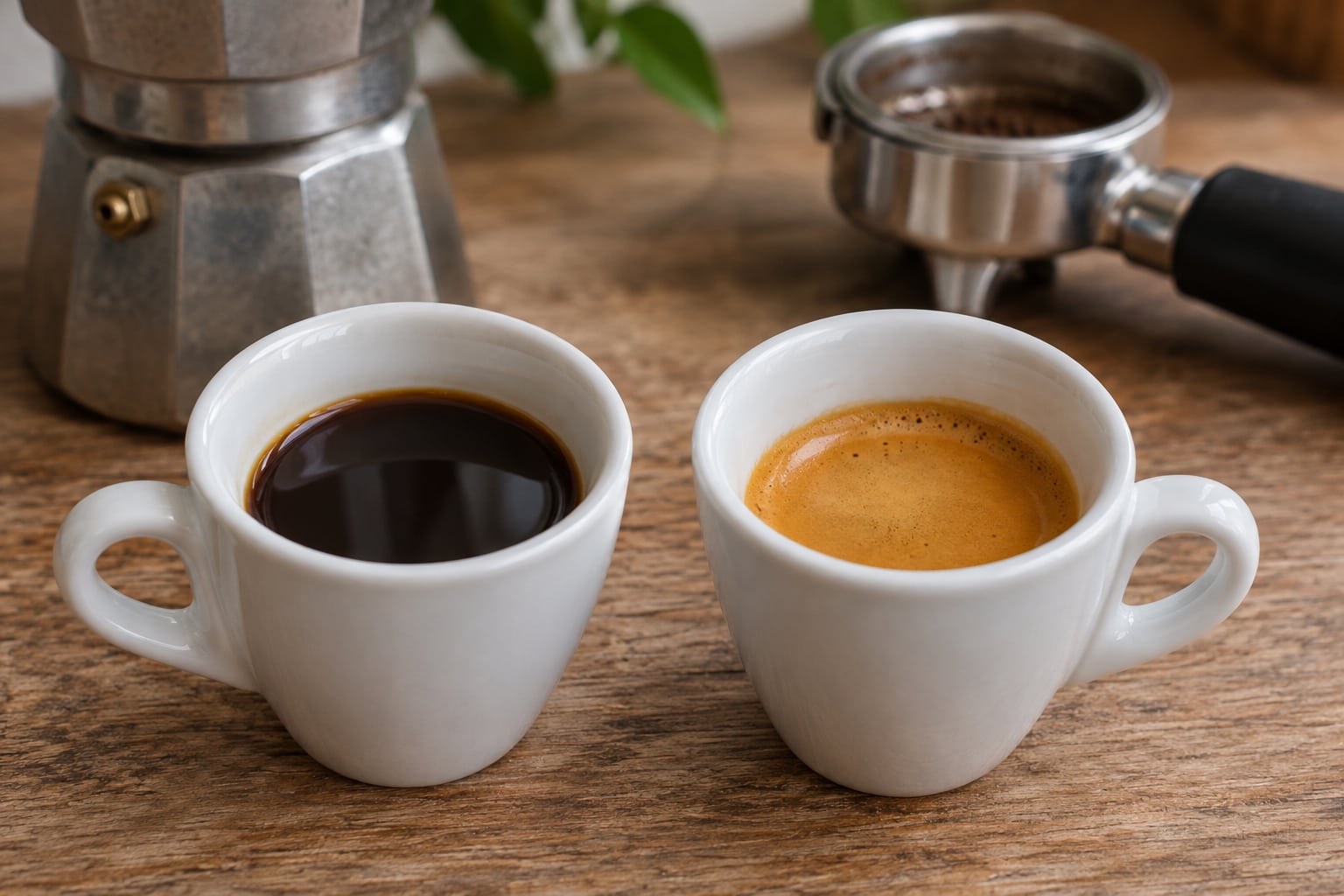
Crema is the foam that often forms on a freshly pulled espresso. Pressure, gas in the coffee, bean composition, roast, and freshness affect it. A conventional Moka Pot does not usually produce the same persistent layer, although some models are designed to make more foam.
Do not try to create crema by raising the Moka Pot’s heat, tamping its basket, or modifying its valve. Those changes do not turn it into an espresso machine. If the pot is spitting, leaking, or failing to flow, use Moka Pot troubleshooting before brewing again.
A thick crema also does not prove an espresso tastes good. Judge the drink after stirring and tasting it, not only from the surface.
Which is better for lattes and cappuccinos?
Both can make enjoyable coffee with milk. Espresso is the conventional base, and its high concentration helps it remain distinct under a larger amount of milk. A machine with a capable steam wand also gives you direct control over foam texture.
A Moka Pot is a useful alternative when you do not own that setup. Brew normally, then add hot milk a little at a time rather than filling a large mug immediately. If the coffee disappears under the milk, reduce the milk on the next serving before trying to brew the pot more aggressively.
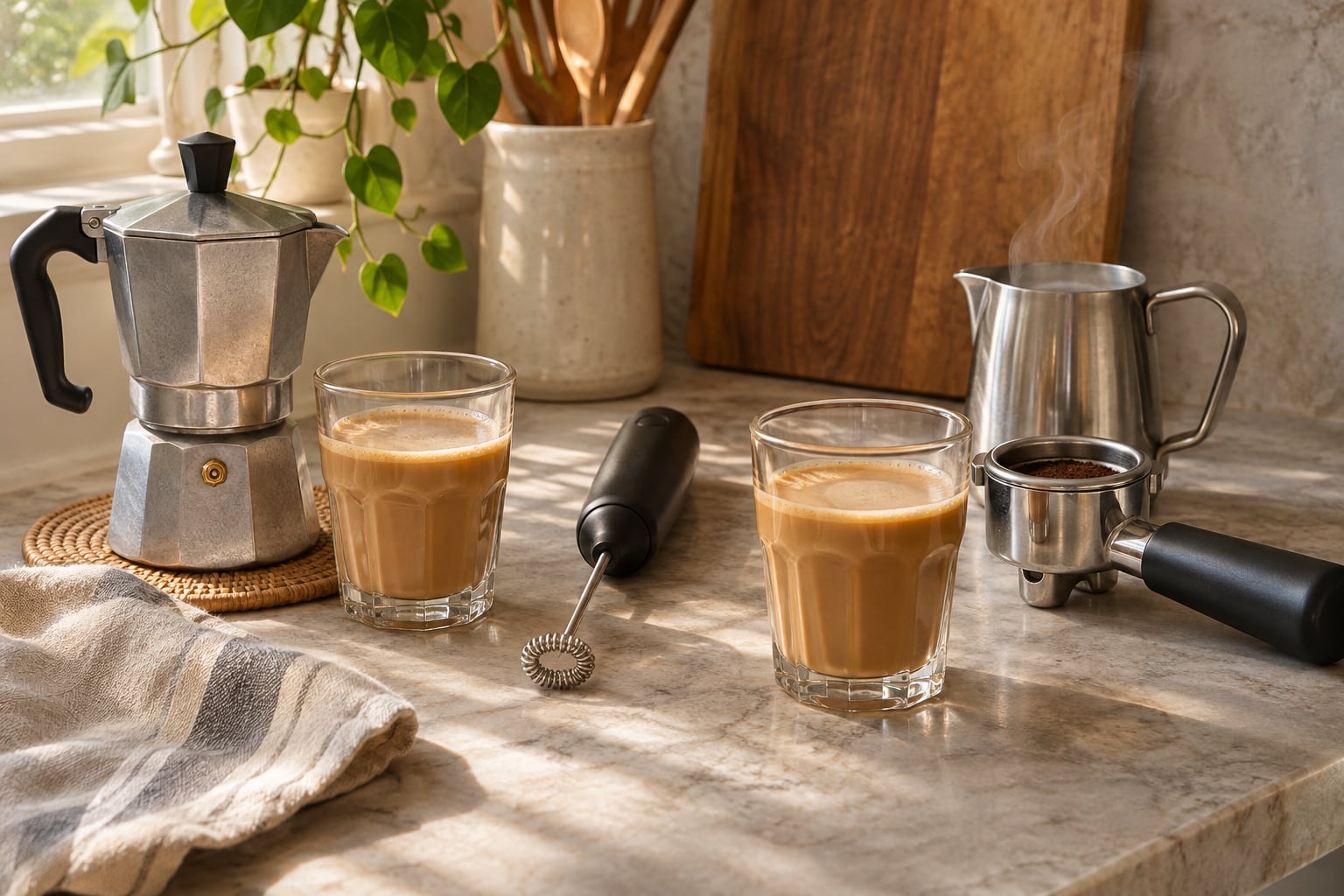
Start with the latte-at-home guide for coffee bases and proportions. Frothing milk covers steam wands and manual options. A French press or handheld frother can add foam; it does not reproduce a steam wand’s workflow exactly.
Which setup asks more of your grinder?
Espresso in a non-pressurized basket needs fine grinding with small, useful adjustments. A grinder that works well for drip coffee may not have the range or adjustment precision to dial in a shot. Include that in the decision before buying a machine.
A Moka Pot is less demanding, and suitable preground Moka coffee can be a practical starting point. Freshly grinding still helps control the result, but avoid assuming the bag labeled “espresso” has the right grind for every brewer. Beans can be shared between the methods; grind settings usually cannot. See espresso beans vs coffee beans.
If you already own a grinder, check its manufacturer guidance and the settings reference. Treat suggested numbers as starting points rather than guarantees for every bag.
Consider serving size and cleanup
A Moka Pot works best near its intended basket and boiler fill. Choose a size for the drinks you actually make, remembering that its “cups” are small servings. A large pot is not automatically a flexible single-cup brewer.
An espresso machine makes drinks one shot at a time. That offers control, but serving a group can mean repeated grinding, preparation, brewing, and milk steaming. Warm-up time varies substantially by machine and should be part of the purchase decision.
Both need regular cleaning. Let a Moka Pot cool fully before disassembly, clean it according to its material and maker, and dry it thoroughly. Espresso equipment adds baskets, group-head cleaning, and often a steam wand and model-specific descaling routine. Do not assume the smaller serving means less upkeep.
Choose for the mornings you actually have
Keep the Moka Pot if you like its coffee and mostly want small cups or a simple milk drink. Buy an espresso setup when controlling espresso itself is the goal and you are willing to learn the grinder and maintenance routine.
If what you really want is a large mug of black coffee, consider drip or pourover before either. They make that style of drink directly, without brewing a concentrate and diluting it. The best choice is the one that produces the drink you want often enough to justify its routine.