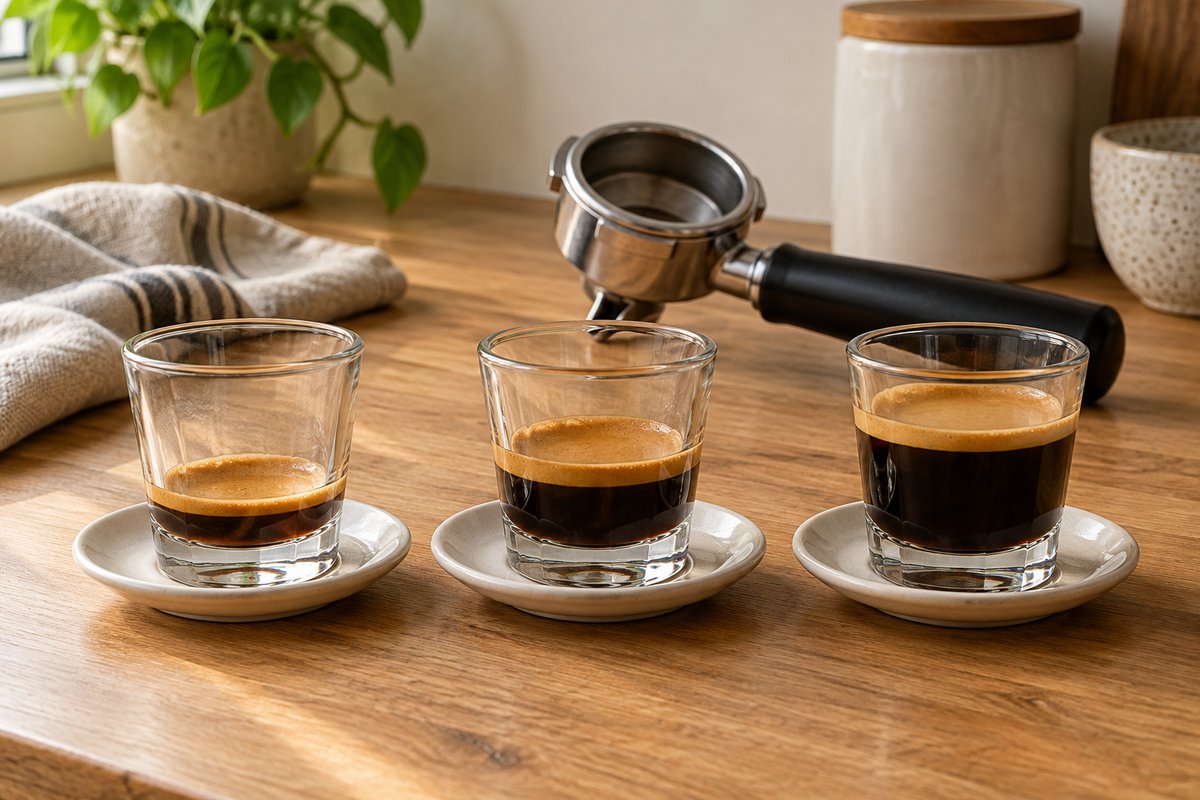
A ristretto and a lungo are the same espresso shot stopped at different points. Both start with the same dose of ground coffee. A ristretto stops early, at about 1 to 1.5 times the dose in liquid, so it is small, thick, and sweet. A lungo keeps running to about 2.5 to 3 times the dose, so it is bigger, thinner, and more bitter. A normal espresso sits between them at 1:2.
If you want a short, intense coffee or a base for a small milk drink, choose the ristretto. If you want a bigger cup from an espresso machine, a lungo works, but an Americano usually tastes better. Both are explained below.
Side by side
All three columns use the same 18g dose, the usual double basket.
| Ristretto | Normale (espresso) | Lungo | |
|---|---|---|---|
| Ratio | 1:1 to 1:1.5 | 1:2 | 1:2.5 to 1:3 |
| In the cup, from 18g | 18–27g | 36g | 45–54g |
| Shot time, dialed in | About 20–30 seconds | 25–30 seconds | About 30–40 seconds |
| Texture | Thick and syrupy | Rich, medium body | Thin, closer to strong filter coffee |
| Taste | Sweet, intense, low bitterness | Balanced | Lighter, more bitter and drying |
| Caffeine | A little less than espresso | The reference | A little more than espresso |
| Best for | Sipping straight, small milk drinks | Everything | A bigger black coffee from the machine |
The ratio is the weight of the coffee you put in against the weight of the liquid that comes out. It does not count any water or milk added afterwards. For yields at other doses, use the chart in espresso ratios.
What the names mean
The words are Italian. Ristretto means “restricted”: less water is allowed through the coffee. Lungo means “long”: more water runs through it. A normal espresso is sometimes called a normale to tell it apart from both.
You will also see a ristretto called a short shot and a lungo called a long shot or a long espresso. They mean the same thing.
Which is stronger?
A ristretto is stronger in taste and a lungo has slightly more caffeine. Those are different measurements, and mixing them up causes most of the confusion here.
Strength is how concentrated the drink is. A ristretto puts the same coffee into roughly half the liquid of a lungo, so every sip is denser and heavier on the tongue. A lungo spreads the same coffee out, so it tastes lighter even though it is a bigger drink.
Caffeine depends mostly on how much coffee went into the basket, and a ristretto and a lungo from the same dose start with the same 18g. Caffeine also comes out early in a shot: in tests that split espresso shots into thirds by time, about 70% of the caffeine landed in the first third. So the extra water in a lungo pulls out only a little more caffeine than a ristretto. It does not come close to doubling it. Caffeine in coffee covers why the dose matters far more than the method.
Why they taste so different
Coffee does not dissolve all at once. As water passes through the puck, flavors come out in roughly this order:
- Bright, sour acids come first.
- Sweetness and body follow.
- Bitter, drying compounds arrive last and keep coming the longer the water runs.
A ristretto stops before much of that last group arrives, which is why it tastes sweet and round even though it is concentrated. Stop it too early, though, and the sourness has not been balanced by sweetness yet.
A lungo keeps going into the bitter end. The extra water thins the shot out, and it also extracts more of the harsh compounds that a normal shot leaves behind. That is why a lungo tastes thinner and more bitter than an espresso, which surprises people who expect “more water” to mean “milder”. Coffee extraction explains the process in more detail.
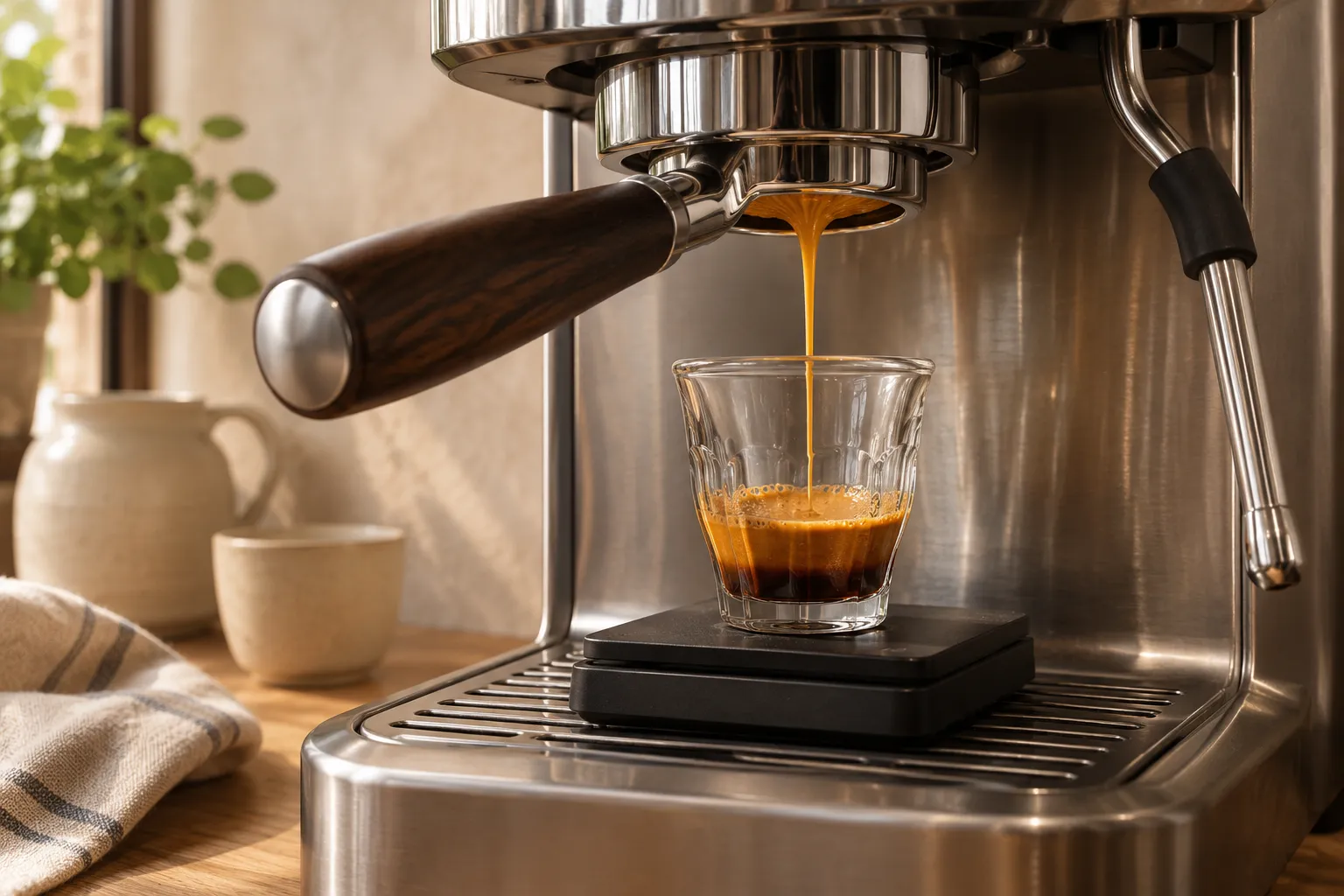
Measure the liquid in the cup to choose where a ristretto or lungo stops.
How to pull each one at home
Dial in a normal 1:2 espresso first. The espresso recipe is 18g in, 36g out, in about 25 to 30 seconds. Both other shots are small changes from there. Put a scale under the cup for both. Crema makes a shot look much bigger than it is, so measuring by eye or by a line on the glass is unreliable.
For a ristretto, stop the shot at 18 to 27g. If you keep the same grind and simply stop early, the shot will be short in time too, and it often tastes sour. Grind one step finer so the smaller shot still takes around 20 to 30 seconds. That gives the sweetness time to come through.
For a lungo, let the shot run to 45 to 54g. With the same grind, it will run long and taste harsh. Grind one step coarser so the extra water passes through faster, aiming for roughly 30 to 40 seconds.
In both cases, taste matters more than the timer. If the ristretto is still sour, go finer again. If the lungo is still bitter, go coarser or stop it a little sooner. The Espresso Compass turns a sour, bitter, or watery shot into one change for the next attempt.
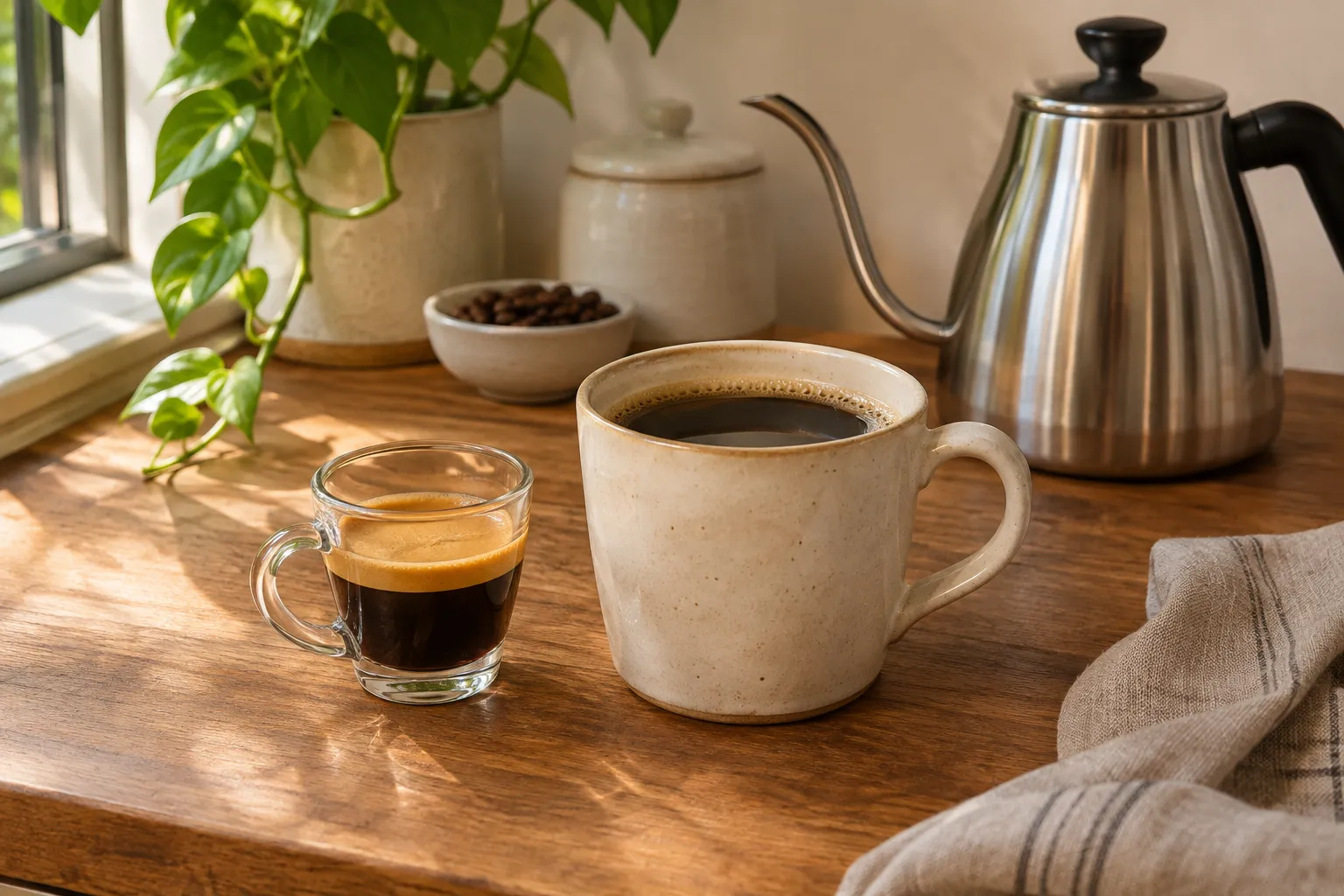
An Americano gets its extra volume from water added after the shot.
Lungo, two espressos, or an Americano?
If what you actually want is a bigger cup from an espresso machine, you have three choices, and they are quite different:
| Option | What it is | Result |
|---|---|---|
| Lungo | One dose, more water pushed through the coffee | Bigger, thinner, more bitter |
| Two espressos | Two separate normal shots in one cup | Twice the coffee and caffeine, but the same strength as one shot |
| Americano | One normal shot, then hot water added | A full mug, clean and balanced |
For a full-sized black coffee, an Americano is usually the better choice. It extracts the shot normally, then dilutes it with water that never touched the coffee, so you get the size without the bitterness. That added water is called bypass water. Espresso ratios also covers the long black, which is an Americano made in the opposite order.
Choose two espressos when you want more caffeine and more of the shot’s flavor. The cup is twice the size of one espresso but exactly as concentrated, because both shots use the same 1:2 ratio. On a capsule machine that means two capsules. At home, where the 18g baseline is already a double basket, it means pulling a second shot.
A lungo is worth it when you like its lighter style. Some light roasts are hard to extract in a short shot and taste sour as a normale. A longer shot can bring out the fruit and floral notes. For dark roasts, a lungo usually just tastes ashy.
Ristretto in milk drinks
A ristretto is a popular base for small milk drinks such as the flat white and cortado. Its sweetness and thick body hold up against milk, and its low bitterness means the coffee tastes rich rather than harsh. Some cafés use ristretto shots for every flat white for that reason.
In a large latte, the difference is smaller, because the milk dilutes any shot heavily. A normal 1:2 shot works well there. A lungo is the weakest choice for milk drinks: it is thin to begin with and tends to disappear. See how to make a latte for the full method.
On capsule and automatic machines
Capsule machines usually have an espresso button and a lungo button. The capsule holds the same coffee either way, so the lungo button simply pushes much more water through it. That makes a true lungo, and an espresso capsule run long has the same bitterness as a long shot from any other machine. That is why many capsule ranges sell separate lungo capsules, blended and ground to taste better at that length. Use one of those for the lungo button.
Bean-to-cup machines vary. Some grind a bigger dose for a long drink and some do not, so check the manual before deciding the lungo setting is the problem.
If the lungo button tastes harsh to you, try this: use the espresso button, then top the cup up with hot water from the kettle. You get the same size of drink as an Americano, and it is usually smoother.
Some capsule ranges sell coffees named “ristretto”. That name usually describes a darker, more intense blend made for a short cup, as well as the size of the drink. You can still run it through the espresso button for a normal shot. Dialing in with pods explains what you can and cannot change on these machines.
Which should you choose?
- You drink espresso straight and like it sweet and heavy: ristretto. It flatters chocolatey medium and dark roasts in particular.
- You make flat whites or cortados: ristretto or a normal shot.
- You want a big black coffee: an Americano, not a lungo.
- You want more caffeine: two shots. A lungo adds very little.
- You drink light roasts straight and a normal shot tastes sour: try a lungo at about 1:2.5.
Fix the shot
| What you taste | Likely cause | First change |
|---|---|---|
| Ristretto is sour and sharp | Shot ran too fast; the sweetness never came out | Grind finer, keep the same yield |
| Ristretto is bitter and tarry | Grind too fine for your dose, or a dark roast pulled very short | Grind slightly coarser, or move toward 1:1.5 |
| Lungo is bitter and drying | Too much water through too fine a grind | Grind coarser, or stop a few grams sooner |
| Lungo is thin and watery | The ratio is longer than you like | Stop sooner, or make an Americano instead |
| Both shots taste the same | You stopped by time, not weight | Put a scale under the cup |
New to the words? Dose, yield, and crema are all in the glossary.